How surfing helps people
Surfing is more than a sport — it’s a reset for the body and mind.
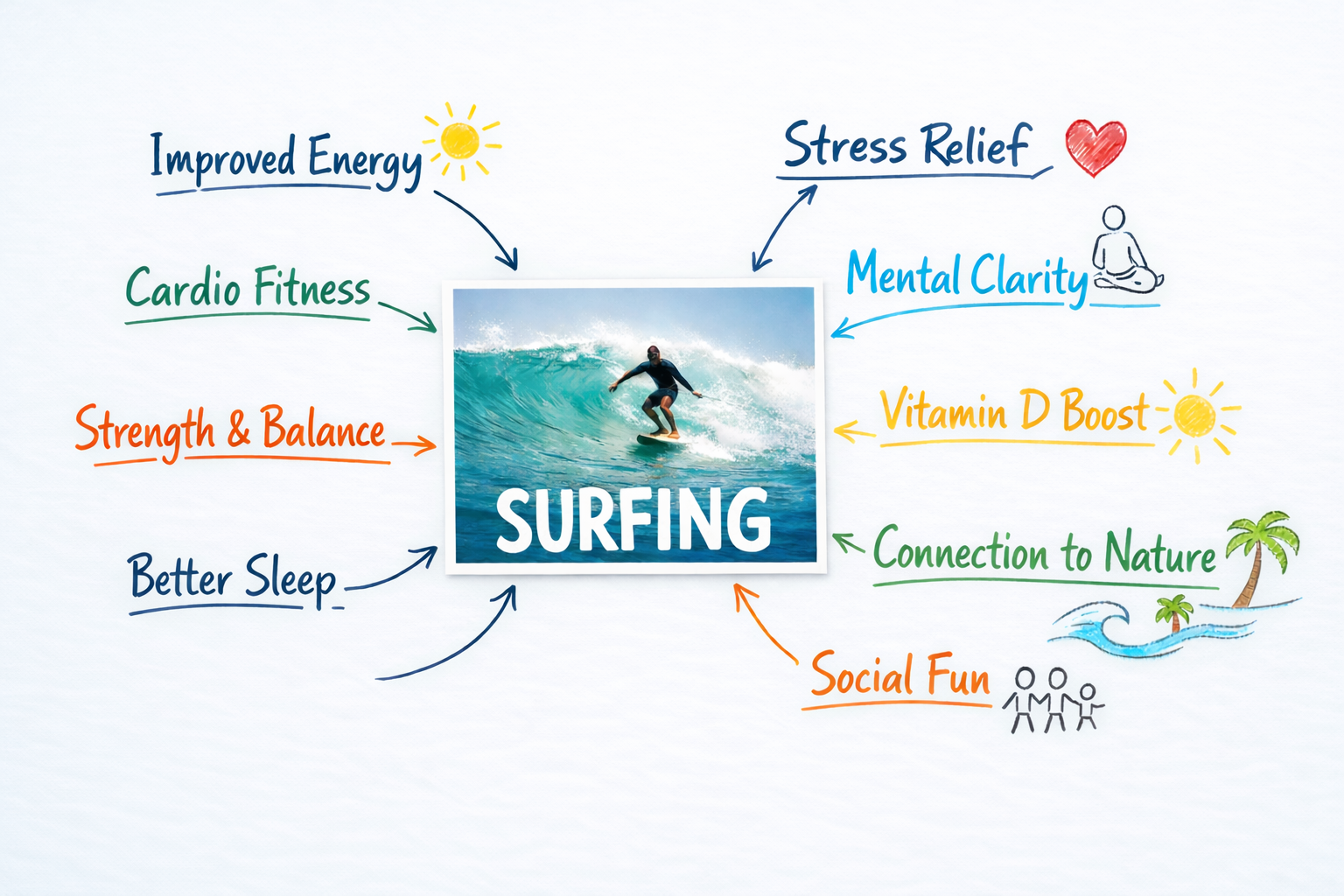
Time in the ocean naturally calms the nervous system. The rhythm of waves, steady breathing, and present-moment focus help reduce stress, anxiety, and mental overload. Research shows over 75% of surfers report positive impacts on mental health, stress management, and social connection, highlighting the wellbeing benefits of blue spaces.
Confidence Through Small Wins
Surfing builds confidence in simple, powerful ways — standing up, catching a wave, or paddling out on a tough day. These moments remind people they are capable, and that confidence carries into everyday life.
Emotional Wellbeing
Often described as therapy without words, surfing creates space to release emotions without judgement. Surf therapy studies show reductions in depression, anxiety, and emotional distress, while shared time in the ocean builds belonging and reduces isolation.
Physical Benefits
Surfing improves strength, balance, coordination, and cardiovascular fitness — while feeling fun, not forced. Like other forms of movement, it boosts endorphins that support mood and mental wellbeing.
What People Feel After Surfing
Calmer. Lighter. More confident. Proud of their body. More motivated for life.
Surfing also teaches patience, resilience, and adaptability learning to fall, reset, and try again.
Stats sourced from trusted, evidence-based research (e.g. PubMed).
Around the World, Surfing is Helping People Heal
There are surf therapy organisations (e.g., Surf Therapy Aotearoa, Wavewise) actively using surfing as a mental and social wellbeing intervention across the country. These are part of the global surf therapy movement and collaborate with health professionals to support wellbeing.
🇳🇿 New Zealand
In Biarritz and surrounding coastal regions, doctors have been known to prescribe structured surfing and paddle boarding lessons as part of treatment plans for things like stress, obesity, depression, heart disease, diabetes, back pain, etc. Patients are given courses (e.g., 12-week programs) that can sometimes replace medication or serve as a therapeutic intervention.
🇫🇷 France
The NHS and health professionals in the UK recognize surf therapy as a supportive treatment, particularly for mental health conditions such as depression and post-traumatic stress. There are official programs (like The Wave Project) where doctors, social workers, or mental-health professionals refer patients to surf therapy initiatives.
🇬🇧 United Kingdom
🇿🇦 South Africa
Surf therapy exists as structured mental-wellness support, especially through organisations like Waves for Change in the Western & Eastern Cape. Participants are often referred from schools, clinics or community programs as part of psychosocial support, particularly for youth — but this is usually referral by a clinician or care provider, not a traditional doctor’s prescription like a medicine order.
While not always “prescribed” in a traditional sense, the U.S. military (e.g., the Navy) has offered surf therapy as part of care for active personnel and veterans (especially for PTSD) — and individual clinicians sometimes formally recommend it.